
Knowing Jesus,
Growing in God’s love
Sharing it with all
How to Pray Taraweeh
The night prayer of Ramadan
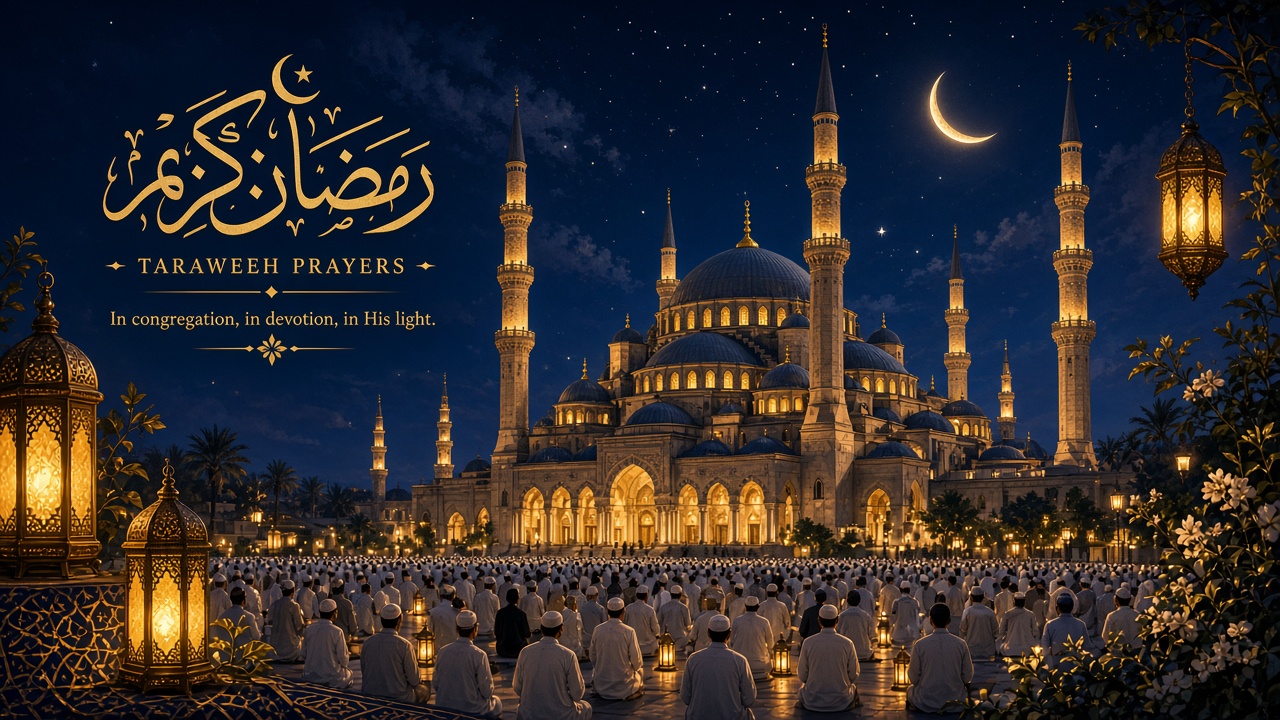
Taraweeh is the special voluntary night prayer offered during the month of Ramadan. Prayed after the obligatory Isha prayer, it is a cherished part of the Ramadan nights, when communities gather in mosques to listen to long, beautiful recitations of the Qur’an. The word itself relates to “rest,” because worshippers traditionally pause briefly after each set of units. This guide explains when Taraweeh is prayed, how many rak’ahs, and how to pray it whether at the mosque or at home.
When is Taraweeh prayed?
Taraweeh is prayed only in Ramadan, each night after the Isha prayer and before the Witr prayer. It can be performed in congregation at the mosque or individually at home. Because it is a night prayer, it carries the calm, reflective character of the late evening, and many people attend the mosque specifically to pray it together.
How many rak’ahs?
Taraweeh is prayed in pairs of two rak’ahs, with a short rest after every two or four. Different communities follow different numbers – commonly eight or twenty rak’ahs – and both practices are well established. What matters most is sincerity and consistency rather than a particular total.
Common practices compared
| Setting | Typical rak’ahs | Feature |
|---|---|---|
| Mosque (congregation) | 8 or 20 | Long Qur’an recitation led by an imam |
| At home (individually) | As one is able | Flexible pace and length |
| After Taraweeh | Witr (usually 3) | Concludes the night prayers |
Step-by-step method
- Pray the obligatory Isha prayer first, as Taraweeh follows it.
- Make the intention to pray Taraweeh, for the sake of God, during Ramadan.
- Pray in sets of two rak’ahs, each with Surah al-Fatihah and a portion of the Qur’an.
- After every two or four rak’ahs, pause briefly to rest and remember God.
- Continue until you have completed your chosen number of rak’ahs.
- Finish the night’s prayers with the Witr prayer.
Praying Taraweeh at home
If you cannot reach a mosque, Taraweeh at home is entirely valid and spiritually rewarding. A few simple steps can help you make the most of it:
- Choose a calm time after Isha when you will not be rushed.
- Prepare the passages you wish to recite, even short ones, so the prayer feels meaningful.
- Pray with your family where possible, taking turns to encourage one another.
- Keep a steady, unhurried pace rather than rushing through the rak’ahs.
- End with Witr and a few moments of personal du’a.
The spirit of Ramadan nights
Taraweeh is one of the great joys of Ramadan. Night after night, the long recitations carry worshippers through much of the Qur’an, and the shared gathering builds a deep sense of community and devotion. Whether you pray eight rak’ahs or twenty, at home or in the mosque, approach it with a willing heart and a desire to draw near to God. Begin at a pace you can sustain across the whole month, and let these blessed nights renew your faith.